Discover Florida Nature
It's time to explore the natural Florida

 Florida
History: Colonial Violence to Cheap Growth Florida
History: Colonial Violence to Cheap Growth |
|
|
|
 Now
the fourth most populous state, a once lowly-populated Florida endured a
history of violent struggles between European, American, and Indian
peoples. European and northern encroachment on Seminole Indians,
slavery, and racial segregation ignited genocidal wars and civil rights
struggles whose effects linger in the social makeup of today’s Florida.
Long before, and for awhile after, becoming the 27th state in 1845, the
territory of Florida served as a ground for contestation between
European settlers from Spain, France, and England, and between white
settlers and the relatively large population of indigenous Indians and
slaves. Black slaves, Indians, and even poor whites were frequently the
pawns of these wars, often serving at the convenience of the cotton
industry and imperial powers. These marginalized, enslaved, and
exploited groups were often used to strategically destabilize other
southern colonies through European and U.S. policies that encouraged
their immigration into Florida, or, as in the case of the Seminoles,
were forced to emigrate west out of Florida. Now
the fourth most populous state, a once lowly-populated Florida endured a
history of violent struggles between European, American, and Indian
peoples. European and northern encroachment on Seminole Indians,
slavery, and racial segregation ignited genocidal wars and civil rights
struggles whose effects linger in the social makeup of today’s Florida.
Long before, and for awhile after, becoming the 27th state in 1845, the
territory of Florida served as a ground for contestation between
European settlers from Spain, France, and England, and between white
settlers and the relatively large population of indigenous Indians and
slaves. Black slaves, Indians, and even poor whites were frequently the
pawns of these wars, often serving at the convenience of the cotton
industry and imperial powers. These marginalized, enslaved, and
exploited groups were often used to strategically destabilize other
southern colonies through European and U.S. policies that encouraged
their immigration into Florida, or, as in the case of the Seminoles,
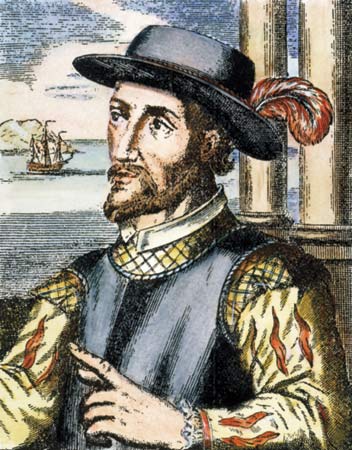
were forced to emigrate west out of Florida. Going back to the origins of Western settlers in Florida, Juan Ponce de León, a Spanish conquistador from the early 16th century, is credited with naming Florida. La Florida is a Spanish name that described Florida’s “flowery” terrain as well as indicating the season of “Flowery Easter” in which Ponce de León first touched down in Florida. It was the first territory in what is today’s United States to acquire a European name. Ponce de León may have been amongst the early Western explorers of Florida, but his role as the original Western discoverer of Florida is not as clear given that some historical accounts claim he encountered Spanish-speaking indigenous Floridians. Over 50 years after Ponce de León made his way through the future Sunshine State, the Spanish Pensacola was established as the first European settlement in the continental U.S. This event only marked the inauguration of a centuries-long back-and-forth warring between the Spanish and French colonialists, first exhibited only a few decades thereafter when the French Huguenots gained a settlement in the Jacksonville area. The French Huguenots in northeastern Florida would later become entangled in a deadly battle with Spanish settlers in St. Augustine, often cited as the original colonial city of the U.S. Things would end badly for these French settlers when many were struck by extreme weather at sea, massacred by the Spanish on the banks of the Matanzas (Spanish for “killings”) in St. Augustine, or blackmailed into Roman Catholicism in exchange for their lives. 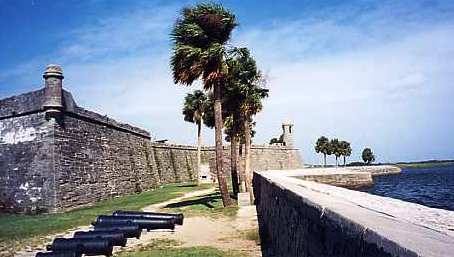 In
the 17th and 18th centuries, the French colonial threat to the
Spanish-ruled areas of Florida continued, but that threat was joined by
increased battles with the English colonialists to the north of
Florida. The English would burn down
St. Augustine and its main
cathedral several times, succeeding in ways the French could not. The
English also used Indian tribes from the southeast to pose a resistance
to Spanish power by arming and emboldening the indigenous peoples.
Meanwhile, the Spanish provided sanctuary to southern slaves in order to
undermine the economies of the other southern colonies. The first
legally-free black settlement is said to have been created north of St.
Augustine. In exchange for this precarious freedom, the former slaves
were forced to convert to Catholicism and provided a “buffer” for St.
Augustine against northern invaders. In
the 17th and 18th centuries, the French colonial threat to the
Spanish-ruled areas of Florida continued, but that threat was joined by
increased battles with the English colonialists to the north of
Florida. The English would burn down
St. Augustine and its main
cathedral several times, succeeding in ways the French could not. The
English also used Indian tribes from the southeast to pose a resistance
to Spanish power by arming and emboldening the indigenous peoples.
Meanwhile, the Spanish provided sanctuary to southern slaves in order to
undermine the economies of the other southern colonies. The first
legally-free black settlement is said to have been created north of St.
Augustine. In exchange for this precarious freedom, the former slaves
were forced to convert to Catholicism and provided a “buffer” for St.
Augustine against northern invaders. The English would diplomatically acquire Florida through the Peace of Paris treaty in 1763, which ended the Seven Years’ War in Europe. This would be a short-lived set-up, however, since the Spanish were able to regain the territory once the British were defeated in the Revolutionary War. Starting early in the 19th century, the U.S. Army would become constantly engaged in wars against the Seminole Indians of Florida, beginning with tribes in eastern Florida. In 1819, the Spanish ceded Florida to the U.S. through the Adams-Onis Treaty in exchange for Texas remaining under Spanish-rule after the Louisiana Purchase, setting the stage for a series of “Seminole Wars” that were largely credited to the anti-Indian zeal of President Andrew Jackson. Jackson exploited the growing white resentment of the Seminole Indians due to white encroachment on the state and the practice of Indians of providing land and protection for black slaves from other states. The third and final Seminole War (1850s) came after Florida’s official statehood and book-ended a period where the U.S. government attempted to kill or forcefully remove all remaining Seminoles from Florida. Some Seminoles were able to hold out in the Everglades, though most died or emigrated to the west of the Mississippi River. 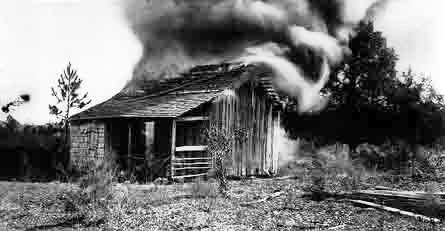 Racial
strife continued when Florida then became a founding member of the
Confederate forces in the Civil War in 1861 after seceding from the
Union. Of the over 140,000 Floridians in 1860, roughly 44% were slaves.
After the Civil War, and largely continuing until the passage of the
Civil Rights bills of the 1960s, Florida continued to disenfranchise
blacks and poor people with poll taxes, literacy requirements for
voting, jobs, and office holding, and strict residency requirements that
amounted to racial apartheid. Anti-black racial violence would erupt in
the early 20th century, which, along with a widespread destruction of
cotton crops due to bow-weevils, forced many blacks to migrate north.
The predominantly black town
Rosewood, Florida
was abandoned in 1923 after it was destroyed in the midst of
racially-motivated massacre. In 1964, St. Augustine would again become
a historically relevant town when
Dr. Martin
Luther King, Jr. spent a night in a St. Augustine jail after staging
a local sit-in. Racial
strife continued when Florida then became a founding member of the
Confederate forces in the Civil War in 1861 after seceding from the
Union. Of the over 140,000 Floridians in 1860, roughly 44% were slaves.
After the Civil War, and largely continuing until the passage of the
Civil Rights bills of the 1960s, Florida continued to disenfranchise
blacks and poor people with poll taxes, literacy requirements for
voting, jobs, and office holding, and strict residency requirements that
amounted to racial apartheid. Anti-black racial violence would erupt in
the early 20th century, which, along with a widespread destruction of
cotton crops due to bow-weevils, forced many blacks to migrate north.
The predominantly black town
Rosewood, Florida
was abandoned in 1923 after it was destroyed in the midst of
racially-motivated massacre. In 1964, St. Augustine would again become
a historically relevant town when
Dr. Martin
Luther King, Jr. spent a night in a St. Augustine jail after staging
a local sit-in.Florida began the 20th century as the least populated state in the south, but gained immigrants once the boost of the national economy, a growing tourism industry, and inexpensive land helped to encourage growth. The Depression of the 1920s and 30s and a flurry of massive hurricanes, however, temporarily ended the growth. Things would pick up again after the Second World War when an improved economy and the availability of air-conditioning appliances enticed those looking for cheap real estate. Popular industrial oddities like the Cape Canaveral space programs (1950s-), coastal fishing industries, and Walt Disney World (1970s-), would attract more workers and tourists as the century wore on. The Sunshine State has struggled politically to reconcile its insistent demand for business and real estate growth against its desire for a more robust public infrastructure, economic stability, and environmental preservation (given its unique natural environs), leaving it more vulnerable than most other states to downswings in business and economic trends, as evidenced by the great housing and banking crash of 2008. |
|
 Follow
us on Facebook Follow
us on FacebookAdvertise | Privacy Statement | Dog Encyclopedia | Video |Contact | Alaska Nature |
|
