Discover Florida Nature
It's time to explore the natural Florida

 Florida
Tribes: Ais Indians Florida
Tribes: Ais Indians |
|
|
|
 The Ais were one of many tribes, consisting
of several hundred thousand people, that lived in Florida prior to first
contact with Ponce de Leon and the Spanish in 1513.
The Ais or Ays as they are sometimes referred as, were hunters and gathers, not farmers. This Native-American tribe gathered fruits and nuts including
sea grapes, coco plums, sea oats and palm berries. The Ais tribes fished using hooks made from the toe bones of deer they had hunted, taking full advantage of the great catches available off the coast of Florida. They hunted large game including deer and bears, along with whatever smaller game they could find.
Ais lived in what is now Brevard, Indian River, St.
Lucie and northernmost Martin counties. Many lived along
the shores of the great lagoon called Rio de Ais now known as the Indian River.
We know that they lived in small villages, but we don't know much about
their origins or their languages. The Ais were one of many tribes, consisting
of several hundred thousand people, that lived in Florida prior to first
contact with Ponce de Leon and the Spanish in 1513.
The Ais or Ays as they are sometimes referred as, were hunters and gathers, not farmers. This Native-American tribe gathered fruits and nuts including
sea grapes, coco plums, sea oats and palm berries. The Ais tribes fished using hooks made from the toe bones of deer they had hunted, taking full advantage of the great catches available off the coast of Florida. They hunted large game including deer and bears, along with whatever smaller game they could find.
Ais lived in what is now Brevard, Indian River, St.
Lucie and northernmost Martin counties. Many lived along
the shores of the great lagoon called Rio de Ais now known as the Indian River.
We know that they lived in small villages, but we don't know much about
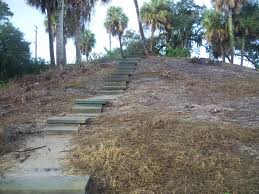
their origins or their languages.Jonathan Dickinson made multiple observations on the appearance, diet and customs of the Ais at the end of the 17th Century and these were found in Jonathan Dickinson's Journal. Dickinson and his party were shipwrecked, and spent several weeks among the Ais in 1696. By Dickinson's account, the chief of the town of Jece, near present day Vero Beach, was paramount to all of the coastal towns from the Jaega town of Jobe (at Jupiter Inlet) in the south to approximately Cape Canaveral in the north (that is, the length of the River of Ais). Dickinson described the fishing technique of the neighboring Jaega people of Jobe stating "The Casseekey [of Jobe] ... sent his son with his striking staff to the inlet to strike fish for us; which was performed with great dexterity; for some of us walked down with him, and though we looked very earnestly when he threw his staff from him could not see a fish at which time he saw it, and brought it onshore on the end of his staff. Sometimes he would run swiftly pursuing a fish, and seldom missed when he darted at him. In two hours time he got as many fish as would serve twenty men." The Ais did not survive long after Dickinson's recount of the time he spent with them. Shortly after 1700 settlers in Carolina started raiding the Ais to capture slaves. By 1743, when the Spanish established a mission among them, the Ais numbers were declining due to slave raids, disease and rum. The Ais were gone from the area by 1760. A burial mound, used by the Ais tribe before they died out around 250 years ago, rises about twenty feet above the base of Old Fort Park. The location later became an Army fort used during the Second Seminole War (1838-1842). During the Seminole War, it was commanded by Lt. Col. Benjamin Pierce, brother to future President Franklin Pierce. It is also believed that it is the location of a Spanish settlement, mission and military outpost dating back to 1567. It is several hundred feet around, and a series of stone steps takes visitors to the top of the mound. The Indian River, named after the Ais, flows by within sight, and the park is reached from Indian River Drive |
|
 Follow
us on Facebook Follow
us on Facebook  Follow
us on Twitter Follow
us on Twitter Advertise | Privacy Statement | Contact | Alaska Nature | Michael Arnold Art| Dog Encyclopedia | Dog Encyclopedia| |
|
