Discover Florida Nature
It's time to explore the natural Florida

 Florida
Climate: Weather Florida
Climate: Weather
|
|
|
|
The climate has always been one of Florida's most important natural resources,
which is reflected in its official nickname, the "Sunshine State."
Florida is famous for it's generally warm climate. The climate of
Florida is partially controlled by the fact that because it is a narrow
peninsula, no part of the state is
very far from the ocean. North of Lake Okeechobee, you will find a humid subtropical climate, while south of the lake
it is a
tropical climate. The seasons in Florida are determined more by
precipitation than by temperature, with the hot, wet springs and summers
making up the wet season, and mild to cool, and the relatively dry
winters and autumns, making the dry season. Fall foliage is a common
sight in North Florida starting around late November, and
into Winter, and some trees either lose their leaves or change colors in
the central region. Overall the best way to recognize that it is fall in
Florida is through the onset of College Football. High temperatures in the state seldom exceed 100° F with
much of Florida commonly seeing a high summer temperature of 90s °F.
In Central Florida we see highs in the low to mid 90's and lows in the
mid to upper 70's as a daily norm. Areas that have the benefit of ocean
or gulf breezes stay a little cooler. There is a defined rainy season from June through September, which
is also hurricane season. Between October and May, fronts regularly
sweep through the state which keeps conditions dry, particularly over
the peninsula. Towards the end of the dry season in the spring, brush
fires become common statewide, although lightening is the number one
cause of fires in the state.
 Lightning-
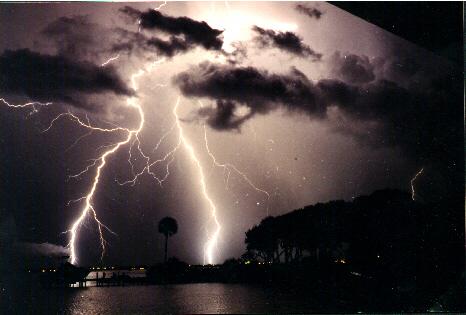
Florida receives the highest density of lightning strikes within the
United States. The corridor from Tampa Bay, Florida to Titusville,
Florida is referred to as "lightning alley", since this area has the
highest amount of lightning per year in the United States Several deaths per
year are blamed on lightning, making lightning one of the deadliest
weather-related phenomenon in the state. On average, 10 people die each
year from lightning. Statistics show that teenage boys are most
vulnerable. People in their 30's are the next most likely victims,
followed by those in their 20's. July is the worst month for lightning
deaths in our state. Summer brings thunderstorms. In July, kids are not
usually in school at all. They are more likely to be outside when a
thunderstorm approaches. The Fourth-of-July holiday weekend is
particularly dangerous. The air in a lightning strike is heated to
50,000 degrees F. It is this rapid heating of the air that produces the
shock wave that results in thunder. A ground stroke can produce
somewhere between 100 million to a 1 billion volts of electricity. The
length of an average cloud-to-ground channel can range from 2 to 10
miles. You can tell how far away a lightning stroke is by counting the
seconds between seeing the lightning flash and hearing the thunder:
Five (5) seconds approximates one (1) mile of distance. If you see a
flash and instantly hear the thunder, the lightning stroke was very
close and you should take shelter immediately! Football games and
other sporting events have learned to delay play for at least thirty
minutes following a lightening strike within 20 miles. Earlier this year
a University of Florida game was cancelled after just 10 seconds of
playing time do to lightening and severe weather. Lightning-
Florida receives the highest density of lightning strikes within the
United States. The corridor from Tampa Bay, Florida to Titusville,
Florida is referred to as "lightning alley", since this area has the
highest amount of lightning per year in the United States Several deaths per
year are blamed on lightning, making lightning one of the deadliest
weather-related phenomenon in the state. On average, 10 people die each
year from lightning. Statistics show that teenage boys are most
vulnerable. People in their 30's are the next most likely victims,
followed by those in their 20's. July is the worst month for lightning
deaths in our state. Summer brings thunderstorms. In July, kids are not
usually in school at all. They are more likely to be outside when a
thunderstorm approaches. The Fourth-of-July holiday weekend is
particularly dangerous. The air in a lightning strike is heated to
50,000 degrees F. It is this rapid heating of the air that produces the
shock wave that results in thunder. A ground stroke can produce
somewhere between 100 million to a 1 billion volts of electricity. The
length of an average cloud-to-ground channel can range from 2 to 10
miles. You can tell how far away a lightning stroke is by counting the
seconds between seeing the lightning flash and hearing the thunder:
Five (5) seconds approximates one (1) mile of distance. If you see a
flash and instantly hear the thunder, the lightning stroke was very
close and you should take shelter immediately! Football games and
other sporting events have learned to delay play for at least thirty
minutes following a lightening strike within 20 miles. Earlier this year
a University of Florida game was cancelled after just 10 seconds of
playing time do to lightening and severe weather.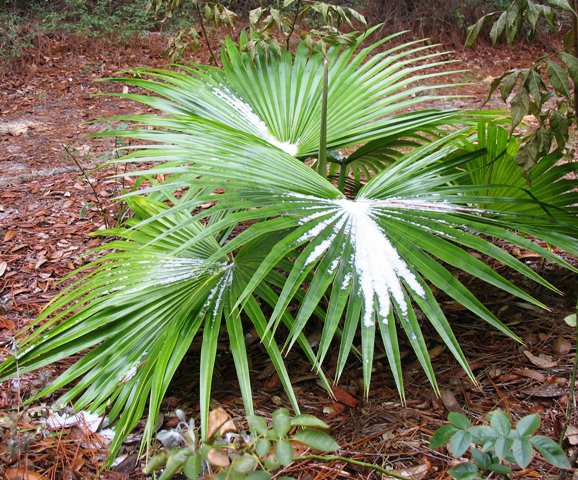 Florida
Precipitation- Florida has the highest average precipitation
of any state, in large part because afternoon thunderstorms are common
in most of the state from late spring until early autumn. A fair day may
be interrupted with a storm, only to return to sunshine an hour or so
later creating
beautiful rainbows stretching across the sky. These thunderstorms, caused by overland collisions of moist
masses of air from the Gulf of Mexico and Atlantic Ocean, pop up in the
early afternoon and can bring heavy downpours, high winds, and sometimes
tornadoes. Hail sometimes accompanies the most severe thunderstorms.
Snow is a rare occurrence in Florida. The most widespread snowfall in
Florida history occurred on January 19, 1977, when snow fell over much
of the state, as far south as Homestead. Snow flurries fell on Miami
Beach for the only time in recorded history. A hard freeze in 2003
brought "ocean-effect" snow flurries to the
Atlantic coast as far south as Cape Canaveral. Florida
Precipitation- Florida has the highest average precipitation
of any state, in large part because afternoon thunderstorms are common
in most of the state from late spring until early autumn. A fair day may
be interrupted with a storm, only to return to sunshine an hour or so
later creating
beautiful rainbows stretching across the sky. These thunderstorms, caused by overland collisions of moist
masses of air from the Gulf of Mexico and Atlantic Ocean, pop up in the
early afternoon and can bring heavy downpours, high winds, and sometimes
tornadoes. Hail sometimes accompanies the most severe thunderstorms.
Snow is a rare occurrence in Florida. The most widespread snowfall in
Florida history occurred on January 19, 1977, when snow fell over much
of the state, as far south as Homestead. Snow flurries fell on Miami
Beach for the only time in recorded history. A hard freeze in 2003
brought "ocean-effect" snow flurries to the
Atlantic coast as far south as Cape Canaveral.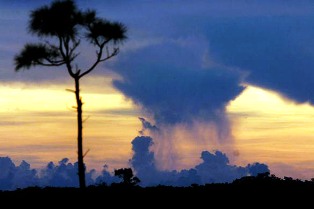 Florida Waterspouts- A waterspout is an intense columnar vortex
(usually appearing as a funnel-shaped cloud) that occurs over a body of
water and is connected to a cumuliform cloud. In the common form, it is
a non-supercell tornado over water. While it is often weaker than most
of its land counterparts, stronger versions do occur. Contrary to
popular belief that waterspouts suck up water, the water seen in the
main funnel cloud is actually water droplets formed by condensation.
Waterspouts have a five-part life cycle: formation of a dark spot on the
water surface, spiral pattern on the water surface, formation of a spray
ring, development of the visible condensation funnel, and ultimately
decay. Waterspouts probably occur more frequently in the Florida Keys
than anywhere in the world. Waters around the Keys, especially from
Marathon past Key West on westward to the Dry Tortugas, see 400 or 500
waterspouts a year. After the Florida Keys, the next most active U.S.
waterspout area is the southeast Florida Coast from around Stuart south
to Homestead. Tampa Bay has the greatest number of damaging waterspouts,
probably because the shores of the Bay are so built up. Florida Waterspouts- A waterspout is an intense columnar vortex
(usually appearing as a funnel-shaped cloud) that occurs over a body of
water and is connected to a cumuliform cloud. In the common form, it is
a non-supercell tornado over water. While it is often weaker than most
of its land counterparts, stronger versions do occur. Contrary to
popular belief that waterspouts suck up water, the water seen in the
main funnel cloud is actually water droplets formed by condensation.
Waterspouts have a five-part life cycle: formation of a dark spot on the
water surface, spiral pattern on the water surface, formation of a spray
ring, development of the visible condensation funnel, and ultimately
decay. Waterspouts probably occur more frequently in the Florida Keys
than anywhere in the world. Waters around the Keys, especially from
Marathon past Key West on westward to the Dry Tortugas, see 400 or 500
waterspouts a year. After the Florida Keys, the next most active U.S.
waterspout area is the southeast Florida Coast from around Stuart south
to Homestead. Tampa Bay has the greatest number of damaging waterspouts,
probably because the shores of the Bay are so built up. |
|
 Follow
us on Facebook Follow
us on FacebookAdvertise | Privacy Statement | Dog Encyclopedia | Video |Contact | Alaska Nature |
|
