Discover Florida Nature
It's time to explore the natural Florida

 Florida
Nature: Florida Flora Florida
Nature: Florida Flora |
|
|
|
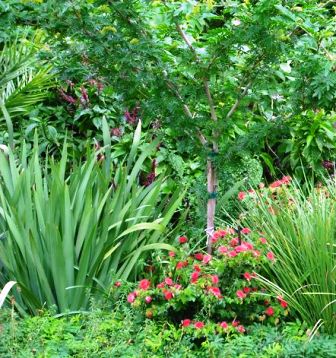 The
word Florida comes from the Spanish Pascua Florida, meaning
“feast of flowers” and it lives up to its name. In a sense, Florida is
the garden of the country. And within that garden—which runs from
temperate, with its spring show of azaleas and dogwood, to the
year-round lush profusion of the tropical—are many splendid gardens just
waiting for your visit. Florida's plant life is highly diverse,
including approximately 450 species of native trees and shrubs. Florida
Native Plants require less water, fertilizer and pesticides, thus
benefiting our threatened environment. As shelter and food for
birds, butterflies and other wildlife, native plants also support
diverse ecosystems. The state of Florida has varying sub-tropical to
tropical temperatures as you travel from the northern panhandle to the
Florida Keys. Use the illustration shown here to see the average minimum
temperatures for each area. For further information on Florida, you may
want to purchase a book from our
Florida Nature Library. The
word Florida comes from the Spanish Pascua Florida, meaning
“feast of flowers” and it lives up to its name. In a sense, Florida is
the garden of the country. And within that garden—which runs from
temperate, with its spring show of azaleas and dogwood, to the
year-round lush profusion of the tropical—are many splendid gardens just
waiting for your visit. Florida's plant life is highly diverse,
including approximately 450 species of native trees and shrubs. Florida
Native Plants require less water, fertilizer and pesticides, thus
benefiting our threatened environment. As shelter and food for
birds, butterflies and other wildlife, native plants also support
diverse ecosystems. The state of Florida has varying sub-tropical to
tropical temperatures as you travel from the northern panhandle to the
Florida Keys. Use the illustration shown here to see the average minimum
temperatures for each area. For further information on Florida, you may
want to purchase a book from our
Florida Nature Library.Native Plants are plants that existed in Florida prior to the first European contact, occurring as part of the natural landscape and apart from human influence are considered native. A tree is generally described as a single stemmed woody plant with a distinct canopy or crown & a height of 15 feet or more. A shrub is also woody stemmed, usually with multiple stems or trunks which rarely or never exceed 13 - 15 feet. In some cases a plant can grow as a small tree or large shrub and are generally popular for landscape use because of this, Southern Wax myrtle is an example. Herbaceous plants, or Herbs, are those with little or no woody growth & may be annual, bi-annual or perennial. These may have single or multiple stems and are under 5 feet tall. Many Florida wildflowers are herbaceous in form. An Ecosystem is a community of plants and animals that live together. Various kinds of plants, animals, and microorganisms are included in a typical ecosystem such as a particular kind of forest, prairie, swamp, lake, stream, or reef. Florida's natural ecosystems are especially valuable because of the disproportionately large contribution they make globally to biological diversity or "biodiversity." The state was colonized over evolutionary time by a diverse mixture of species from continental areas to the north and tropical Caribbean areas to the south. Semi-isolation by ocean on three sides subsequently contributed to a surprisingly high 8 percent of Florida's vascular plant, fish, amphibian, reptile, bird, and mammal species (and important subspecies) that are found nowhere else in the world. Coastal Ecosystems Tropical Coral Reefs Inshore Marine Habitats Mangroves Salt Marshes Dunes & Maritime Forests Freshwater Wetlands & Aquatic Ecosystems Lakes Rivers & Springs Swamps Freshwater Marshes Upland Ecosystems Pine flatwoods & Dry Prairies Scrub & High Pine Temperate Hardwood Forests South Florida Rockland Because of Florida's unique coastal areas, we have a total of thirteen ecosystems. Each area supports different plants and wildlife. Click on any of the ecosystems above to get complete information, including it's area in Florida, the fauna and flora, and other important facts. We have divided our pages into Native Plants and Native Trees and Shrubs. In each area you will find a complete description, along with photos of each piece of plant life. Since Florida an almost countless amount of natural flora, we may not have every item listed here, but we have tried to include all major species. |
|
 Follow
us on Facebook Follow
us on FacebookAdvertise | Privacy Statement | Dog Encyclopedia | Video |Contact | Alaska Nature |
|
