Discover Florida Nature
It's time to explore the natural Florida

 Florida
Artists: Tennessee Williams Florida
Artists: Tennessee Williams |
|
|
|
 Thomas
Lanier Williams, was an American playwright who received many of the top
theatrical awards for his works of drama. He moved to New Orleans in
1939 and changed his name to "Tennessee", the state of his father's
birth. Born to Cornelius and Edwina Dakin Williams on March 26, 1911, in
Columbus, Mississippi, Thomas Lanier "Tennessee" Williams was amply
prepared for writing about society¹s outcasts. His mother was an
aggressive woman, obsessed by her fantasies of genteel Southern living.
Williams' father, a traveling salesman for a large shoe manufacturer,
was at turns distant and abusive. His older sister, Rose, was
emotionally disturbed and destined to spend most of her life in mental
institutions. Tennessee Williams remained aloof from his younger
brother, Dakin, whom his father repeatedly favored over both of the
older children. Who could have foretold that this shy, sickly, confused
young man would become one of America's most famous playwrights. Thomas
Lanier Williams, was an American playwright who received many of the top
theatrical awards for his works of drama. He moved to New Orleans in
1939 and changed his name to "Tennessee", the state of his father's
birth. Born to Cornelius and Edwina Dakin Williams on March 26, 1911, in
Columbus, Mississippi, Thomas Lanier "Tennessee" Williams was amply
prepared for writing about society¹s outcasts. His mother was an
aggressive woman, obsessed by her fantasies of genteel Southern living.
Williams' father, a traveling salesman for a large shoe manufacturer,
was at turns distant and abusive. His older sister, Rose, was
emotionally disturbed and destined to spend most of her life in mental
institutions. Tennessee Williams remained aloof from his younger
brother, Dakin, whom his father repeatedly favored over both of the
older children. Who could have foretold that this shy, sickly, confused
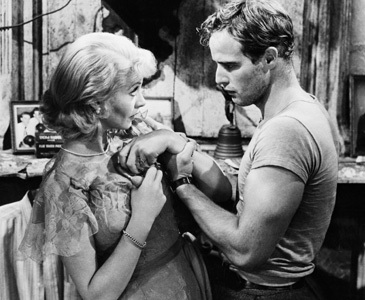
young man would become one of America's most famous playwrights.Williams lived for a time in the French Quarter of New Orleans, Louisiana. He moved there in 1939 to write for the WPA. He first lived at 722 Toulouse Street, the setting of his 1977 play Vieux Carré. The building is part of The Historic New Orleans Collection. Tennessee Williams began writing A Streetcar Named Desire (1947) while living at 632 St. Peter Street. Williams finished it later in Key West, Florida, where he moved in the 1940s. While in New Orleans, Williams met and fell in love with Frank Merlo, a second generation Sicilian American who had served in the U.S. Navy in World War II. Tennessee Williams was close to his sister Rose, a slim beauty who was diagnosed with schizophrenia at a young age. As was common then, Rose was institutionalized and spent most of her adult life in mental hospitals. When therapies were unsuccessful, she showed more paranoid tendencies. In an effort to treat her, Rose's parents authorized a prefrontal lobotomy, a drastic treatment that was thought to help some mental patients who suffered extreme agitation. Performed in 1937 in Knoxville, Tennessee, the operation incapacitated Rose for the rest of her life. 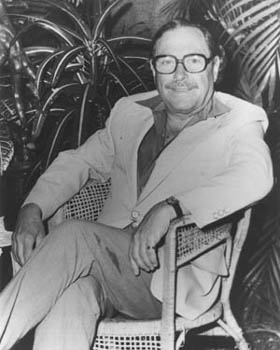 Characters
in Tennessee Williams plays are often seen as representations of his
family members. Laura Wingfield in The Glass Menagerie was
understood to be modeled on Rose. Some biographers believed that the
character of Blanche DuBois in A Streetcar Named Desire is also
based on her. Amanda Wingfield in
The Glass Menagerie was generally seen to represent Williams'
mother, Edwina. Characters such as Tom Wingfield in The Glass
Menagerie and Sebastian in Suddenly, Last Summer were
understood to represent Williams himself. In addition, he used a
lobotomy operation as a motif in
Suddenly, Last Summer. Characters
in Tennessee Williams plays are often seen as representations of his
family members. Laura Wingfield in The Glass Menagerie was
understood to be modeled on Rose. Some biographers believed that the
character of Blanche DuBois in A Streetcar Named Desire is also
based on her. Amanda Wingfield in
The Glass Menagerie was generally seen to represent Williams'
mother, Edwina. Characters such as Tom Wingfield in The Glass
Menagerie and Sebastian in Suddenly, Last Summer were
understood to represent Williams himself. In addition, he used a
lobotomy operation as a motif in
Suddenly, Last Summer.Tennessee Williams claimed that all of his major plays fit into the "memory play" format he described in his production notes for The Glass Menagerie. The memory play is a three-part structure: (1) a character experiences something profound; (2) that experience causes what Williams terms an "arrest of time," a situation in which time literally loops upon itself; and (3) the character must re-live that profound experience (caught in a sort of mobius loop of time) until she or he makes sense of it. The overarching theme for his plays, he claimed, is the negative impact that conventional society has upon the "sensitive nonconformist individual." Tennessee Williams adopted Key West as his home in 1949 and lived there for over thirty years. He was active in productions of his work in the Miami area, notably at Coconut Grove Playhouse and at Studio M. During his time in Florida, Williams received some of the highest honors awarded to contemporary writers, including the Pulitzer Prize for Cat on a Hot Tin Roof. The Pulitzer Prize for Drama was awarded to A Streetcar Named Desire in 1948 and to Cat on a Hot Tin Roof in 1955. These two plays were later filmed, with great success. Both plays included references to elements of Williams' life such as homosexuality, mental instability, and alcoholism. In addition, The Glass Menagerie (1945) and The Night of the Iguana (1961) received New York Drama Critics' Circle Awards. His 1952 play The Rose Tattoo received the Tony Award for best play. In 1980 he was presented with the Presidential Medal of Freedom by President Jimmy Carter. |
|
|
Tennessee Williams
Florida Artist
American Playwright
Thomas Lanier "Tennessee" Williams was an American playwright who received many of the top theatrical awards for his works of drama. The Pulitzer Prize for Drama was awarded to "A Streetcar Named Desire" in 1948 and to "Cat on a Hot Tin Roof" in 1955. These two plays were later filmed, with great success. Both plays included references to elements of Williams' life such as homosexuality, mental instability, and alcoholism. In addition, "The Glass Menagerie" (1945) and "The Night of the Iguana" (1961) received New York Drama Critics' Circle Awards. His 1952 play "The Rose Tattoo" received the Tony Award for best play. In 1980 he was presented with the Presidential Medal of Freedom by President Jimmy Carter.
DOB: March 26, 1911 00:00:00.000
|
|